All-India Institute of Medical Sciences was established as an institution of national importance by an Act of Parliament with the objects to develop patterns of teaching in Undergraduate and Post-graduate Medical Education in all its branches so as to demonstrate a high standard of Medical Education in India; to bring together in one place educational facilities of the highest order for the training of personnel in all important branches of health activity; and to attain self-sufficiency in Post-graduate Medical Educati
The Pharmacy education and profession in India upto graduate level is regulated by the PCI, a statutory body governed by the provisions of the Pharmacy Act, 1948 passed by the Parliament. The Pharmacy Act 1948 was enacted on 4.3.48 with the following preamble- "An Act to regulate the profession of pharmacy. Whereas it is expedient to make better provision for the regulation of the profession and practice of pharmacy and for that purpose to constitute Pharmacy Councils". The PCI was constituted on 9.8.49 under section 3 of the Pharmacy Act.
Staff Selection Commission. This commission is an attached office of the Department of Personnel and Training (DoPT) which consists of Chairman, two Members and a Secretary-cum-Controller of Examinations. His post is equivalent to the level of Additional Secretary to the Government of India.
Staff Selection Commission. This commission is an attached office of the Department of Personnel and Training (DoPT) which consists of Chairman, two Members and a Secretary-cum-Controller of Examinations. His post is equivalent to the level of Additional Secretary to the Government of India.
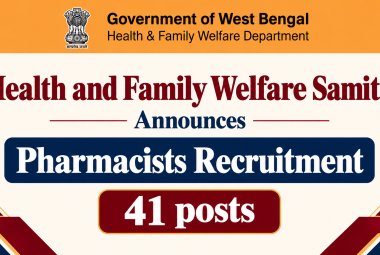
The Directorate of Family Welfare was established in the year 1976 as a part of the Directorate of Health Services subsequently around 1992-93, the department of Family Welfare was separately administratively from Director of Health Services .The need to reduce the IMR, MMR & TFR, it became imperative to have an independent organizational set up for the Directorate of Family Welfare on the pattern of similar directorates countrywide. The various activities include planning, implementing, supervising, collaborating, monitoring and evaluating various aspects of RMNCH + A Program, a flagship program under NRHM has six components:- Reproductive, Maternal, Neonatal, Child & Adolescent Health.
BPPI is the implementing agency for Pradhan Mantri Bhartiya Janaushadhi Pariyojana of Department of Pharmaceuticals, Ministry of Chemicals & Fertilizers, Government of India. The objective of the scheme is to make available quality generic medicines at affordable prices to all.
BPPI is expanding its operations and has urgent requirements on following posts on contractual basis:
The Directorate of Family Welfare was established in the year 1976 as a part of the Directorate of Health Services subsequently around 1992-93, the department of Family Welfare was separately administratively from Director of Health Services .The need to reduce the IMR, MMR & TFR, it became imperative to have an independent organizational set up for the Directorate of Family Welfare on the pattern of similar directorates countrywide. The various activities include planning, implementing, supervising, collaborating, monitoring and evaluating various aspects of RMNCH + A Program, a flagship program under NRHM has six components:- Reproductive, Maternal, Neonatal, Child & Adolescent Health.
Online Applications are invited for recruitment to the following posts under various Departments of Govt. of NCT of Delhi
The Cabinet Secretariat is responsible for the administration of the Government of India (Transaction of Business) Rules, 1961 and the Government of India (Allocation of Business) Rules 1961, facilitating smooth transaction of business in Ministries/ Departments of the Government.
Retired Armed Forces personnel till 2002 could avail medical facilities only for specific high cost surgery/treatment for a limited number of diseases covered under the Army Group Insurance(Medical Branch Scheme) (AGI(MBS)) and Armed Forces Group Insurance Scheme(Management Information System) (AFGIS (MIS)) schemes. These medicare schemes could provide some relief to the ESM, but it was not a comprehensive scheme as compared to and available for other Central Government Employees. Therefore, the requirement was felt of establishing a medicare system which could provide quality medicare to the retirees of the Armed Forces.