Vacancy for M.Pharm, M.Sc, B.Pharm at Ribosome Research Centre
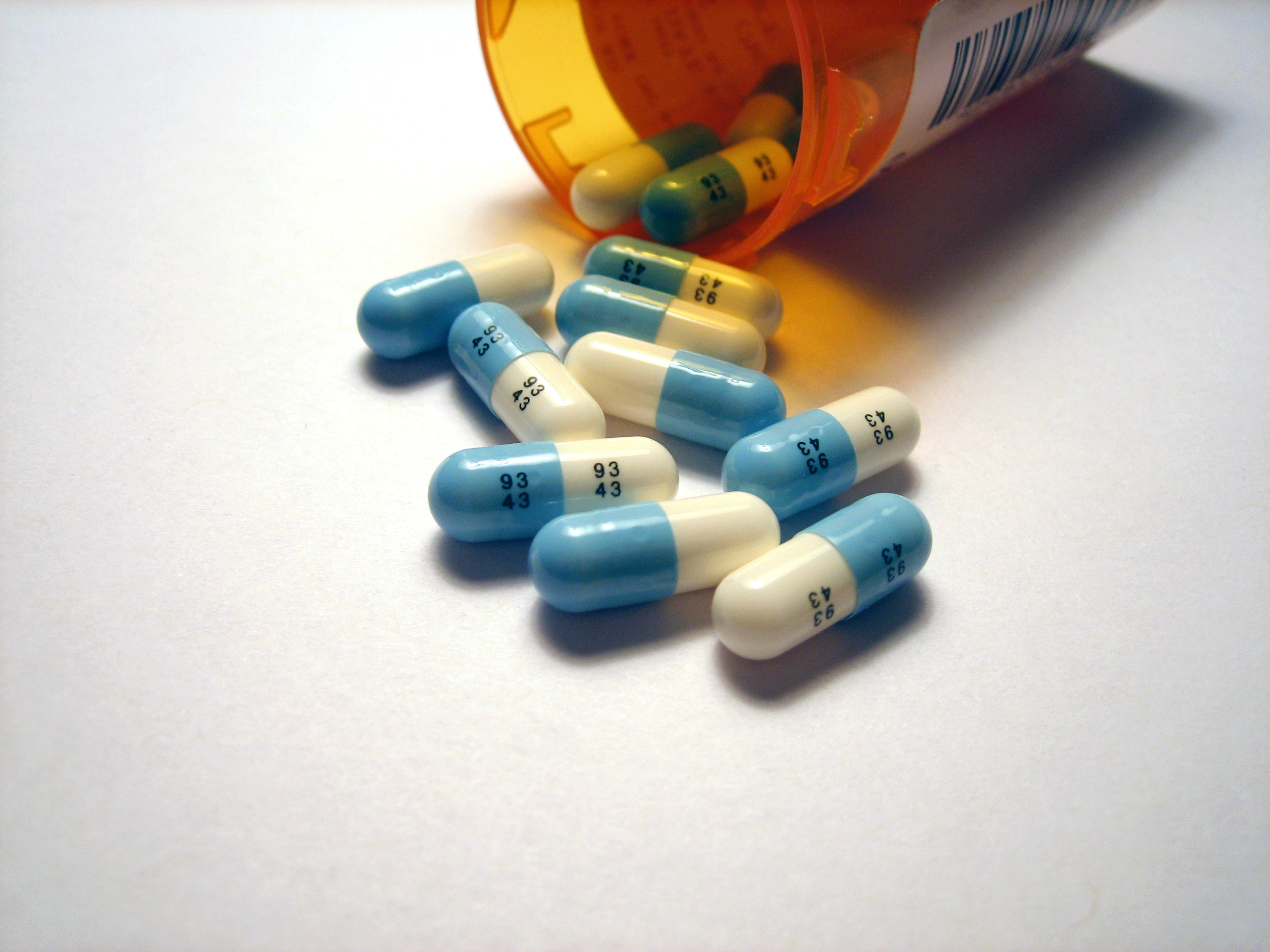
There was a tragic event that shook the world in the 1960’s, when a large number of babies were born with severe deformities whose mothers had been prescribed a drug called ‘thalidomide’ for morning-sickness. “The problem was a result of the consumption of two enantiomers without separation. One of the isomer was toxic, while the other was the drug”, says Prof. A. S. Achalkumar, Department of Chemistry, IIT Guwahati. Prof Achalkumar and Prof. Yasuhiro Ishida from RIKEN, Wako-shi campus, Japan, have developed a simple and novel method to separate chiral enantiomers.
Chiral enantiomers are chemicals that have the same molecular formula but different three-dimensional arrangement of the constituent molecular segments. The separation of enantiomers is significant in bio-medical field because many biochemically active chemicals are found as mixtures of two enantiomers, one of which may be beneficial and the other, toxic.
The chemical properties of enantiomers are similar, which makes it very difficult to separate them, or to synthesize specifically one without being contaminated from the other enantiomer. “Nature is master in the exclusive production of enantiomerically pure amino acids and sugars, but man is still trying to master the art of enantioselective synthesis”, observes Prof Achalkumar. The current method to separate enantiomers is by chromatography, which is slow, energy intensive, and requires environmentally harmful solvents.
“Nature is master in the exclusive production of enantiomerically pure amino acids and sugars, but man is still trying to master the art of enantioselective synthesis”
The researchers have separated enantiomers with the use of helical supramolecular polymers. The helical polymers are formed by the salt formation of aromatic carboxylic acid and chiral amino alcohols. In this simple one-pot process they could resolve racemic mixtures into materials rich in one isomer. The interaction sites in supramolecular polymer not only help in the connection of the monomers but also in the recognition of chiral guests. When two salts with the same chirality are mixed, they undergo copolymerization and became soluble, while those with opposite chirality do not form copolymer and hence precipitate. The precipitated compound can be separated easily. The present system can be used for the enantioseparation of the abundant class of chiral amino alcohols, which has huge commercial potential.”
Prof. Ishida adds that although many supramolecular polymers are known, their enantio-separation ability has never been investigated so far. “Development of such process may help in reducing the price of chiral active pharmaceutical ingredients (APIs) and finally that of the medical treatment, itself. In addition, such process can be extended to other classes of chiral molecules”, he says.
The group of researchers is led by Prof. A. S. Achalkumar, and Prof. Yasuhiro Ishida from RIKEN, Wako-shi campus, Japan. Their path-breaking work has recently been published in the prestigious journal, Nature Communications. The paper has been co-authored by Prof. Achalkumar, Prof. Ishida, Dr. Vakayil Praveen, Senior Scientist, CSIR-National Institute for Interdisciplinary Science and Technology, and research scholars Dr. Krishnachary Salikolimi, Ms. Kuniyo Yamada, and Dr. Noriko Horimoto. The research findings have been published in the journal, Nature Communications.
CLICK HERE TO SUBSCRIBE,
PHARMATUTOR's DAILY EMAILS
Do Not Forget to Verify
(Click on Subscription link in your inbox)
--------