
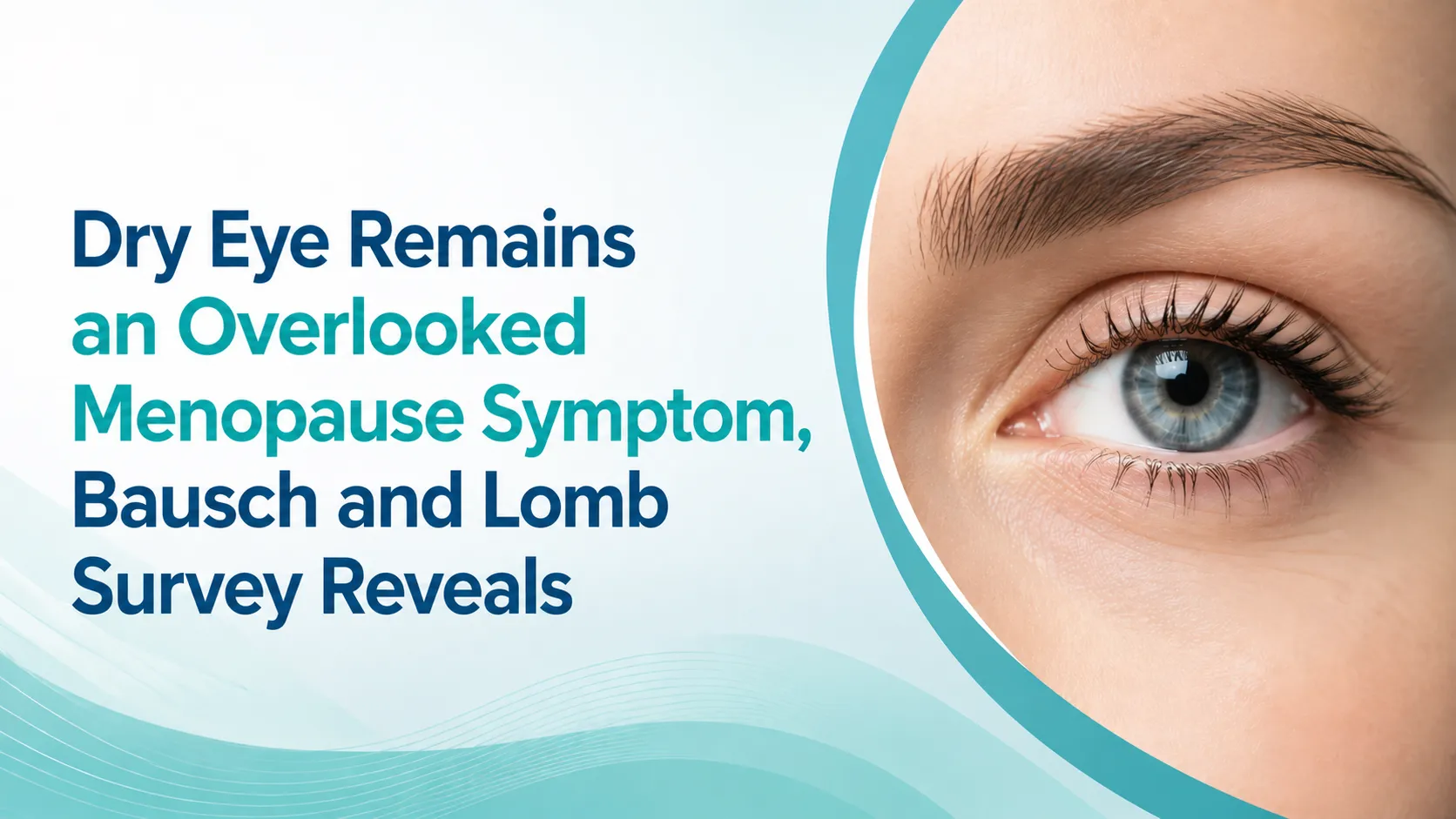
Dry eye is significantly underrecognized as a symptom associated with perimenopause and menopause, according to findings from a new survey conducted by Bausch + Lomb. The survey highlights a substantial awareness gap among women and points to the need for greater attention to eye health during this stage of life.
The 2026 Bausch + Lomb (Peri)Menopause Survey, conducted through Suzy among 402 women aged 30 to 80+ who were perimenopausal, menopausal or post-menopausal, found that only 14% of respondents identified dry eye as a menopause-related symptom. In comparison, 79% recognized hot flashes as a symptom associated with menopause.
The survey found that 78% of women were surprised to learn that dry eye can occur during perimenopause or menopause. Among women who experienced dry eye symptoms during perimenopause, menopause or post-menopause, 80% said the symptom came as a surprise.
Hormonal changes during perimenopause and menopause can affect tear production, tear quality and tear evaporation, potentially contributing to dry eye symptoms. These may include burning, irritation, fluctuating vision and general eye discomfort.
Mayssa Attar, Ph.D., Senior Vice President, Consumer and Pharmaceutical Research & Development at Bausch + Lomb, noted that dry eye symptoms can affect everyday activities and quality of life but are frequently not linked to perimenopause or menopause.
The survey also examined how dry eye symptoms affect daily activities among peri-, menopausal and post-menopausal women experiencing the condition.
The reported impacts included:
58% experienced difficulty reading
53% reported difficulty using screens
26% reported difficulty driving
17% reported reduced productivity
The findings suggest that menopause-related eye symptoms may extend beyond temporary discomfort and interfere with routine activities.
The survey also highlighted broader challenges associated with managing perimenopause and menopause. More than 43% of respondents said managing their symptoms was overwhelming, while more than 40% said they did not know where to start when it came to managing their perimenopausal or menopausal symptoms.
Neda Gioia, OD, CNS, IFMCP, FOWNS, founder of Integrative Vision, emphasized that the frequent oversight of dry eye symptoms during these stages reinforces the importance of including eye health in conversations about menopause.
Bausch + Lomb said the survey findings demonstrate an opportunity to improve awareness of the relationship between menopause and eye health and encourage women experiencing symptoms to discuss them with an eye care professional.
Dry eye occurs when the eyes do not produce enough tears or the appropriate quality of tears. Symptoms can include dryness, irritation, burning, itching, grittiness, excessive blinking, light sensitivity and blurred vision. The severity and underlying causes can vary between individuals.
The company said it continues to offer products and solutions addressing dry eye, including nutritional supplements, over-the-counter eye drops, prescription treatments and diagnostic technologies.