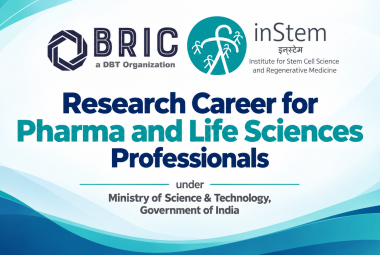

Research Career as Scientist - Pharma and Life Sciences Professionals under Ministry of Science & Technology, BRIC-inStem
Doctor of Philosophy Ph.D. in any discipline of Life Sciences/ Biotechnology/Biochemistry/ Chemistry/ Computational Biology / Pharmaceutical Sciences /Molecular Biology/ Agricultural Sciences/ Plant Sciences / related disciplines. Institute for Stem Cell Science and Regenerative Medicine